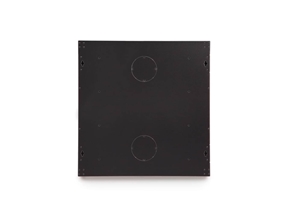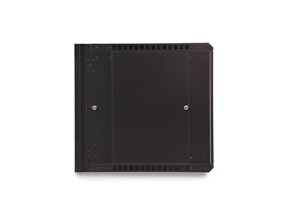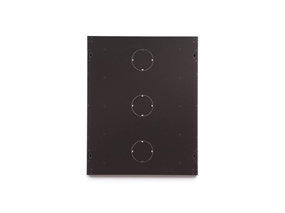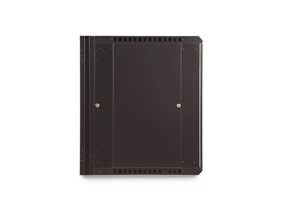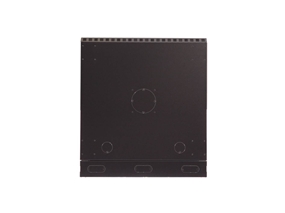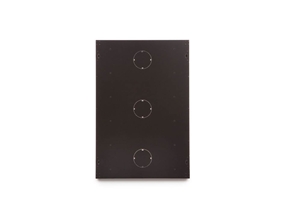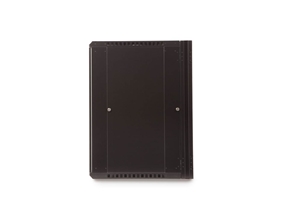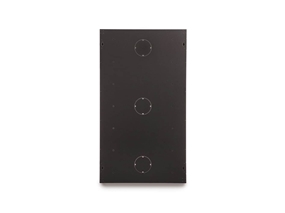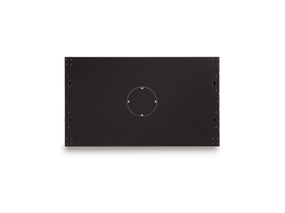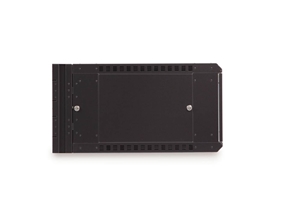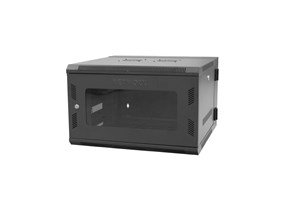
A swing out wall mount cabinet is a wall-mounted rack enclosure where the entire cabinet body hinges open from the wall — swinging out from either the left or right — to provide easy access to the rear of mounted equipment. This design is ideal for wiring closets and installations where rear cable access, patching, or maintenance is needed without removing devices from the rack.
A rack unit (U or RU) is the standard unit of measurement for rack-mountable equipment height. One U equals 1.75 inches (44.45 mm). Equipment is rated in U heights — 1U, 2U, and so on — and cabinets are sized by how many U of equipment they can hold. A 12U cabinet, for example, can accommodate up to 12 rack units of equipment height, or about 21 inches of gear.
Add up the U height of all equipment you plan to install, then add 20 to 30 percent for cable management panels, blanks, and future expansion. A single-room wiring closet or small office setup typically fits in a 6U to 12U cabinet. A growing business network with multiple switches, patch panels, and a UPS often needs 15U to 18U. When in doubt, size up — extra space is easier to fill later than it is to add.
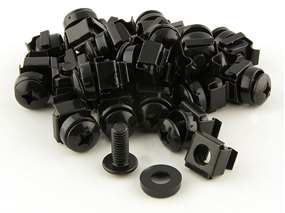
Common equipment includes network switches, patch panels, routers, firewalls, fiber patch panels, NVRs (network video recorders), UPS units, and other standard 19-inch rack-mountable devices. All Networx® wall mount cabinets are designed to house standard 19-inch rack equipment using included front and rear cage nut rails.
Yes. All Networx® wall mount cabinets are built to the standard 19-inch rack profile and include front and rear cage nut rails punched for M6 cage nuts, making them compatible with virtually all standard rack-mountable networking and AV equipment.
Vented side panels allow passive airflow through the sides of the cabinet, which helps dissipate heat from active equipment. Solid panels offer better physical security and a cleaner look but reduce passive airflow. Networx® wall mount cabinets include removable vented side panels, so you can configure airflow based on your equipment's cooling requirements.